
Concrete Sidewalks & Flatwork
Sidewalks, pads, and aprons on a compacted base with rebar, finished for traction.
Get a Free Estimate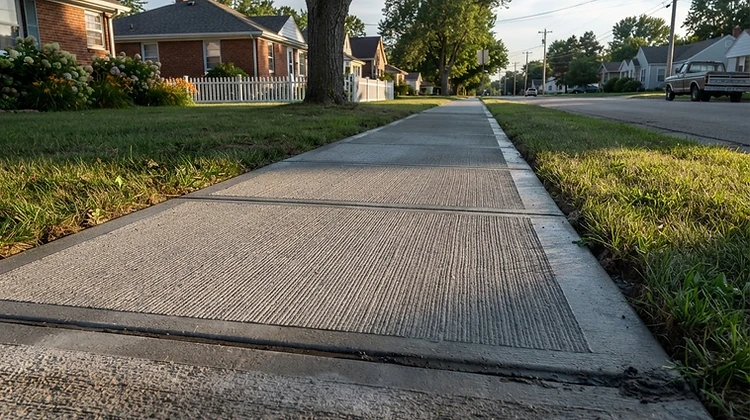
Straight talk
Sidewalks & Flatwork: what you should know first
A sidewalk seems like the simplest concrete there is, which is exactly why so much of it gets done badly. Thin pours over uncompacted ground are why you see walks around here tilted into trip hazards after a few winters.
We pour sidewalks and general flatwork the same way we pour a driveway: base first, steel in the slab, joints on time. The scale is smaller; the physics aren't.
Full transparency
How J Gehring builds it
The base still comes first
Even a three-foot walk gets a compacted base. Frost doesn't skip sidewalks.
Honest thickness
Residential walks get a full four inches; anything a vehicle might cross gets five or more. We'll tell you which your project needs and why.
Broom finish for traction
A broom finish gives grip when the walk is wet or frosted. Smooth looks nice in July and skates in January.
Joints that control the cracking
Tooled or sawn on schedule, spaced right for the slab width.
Good fit
What it's good for
- Front walks and side-yard paths
- Replacing heaved or tilted sidewalk sections
- Utility pads — AC units, generators, trash bins
- Aprons and small pads around the property
Honest pricing
What sets the price
- → Square footage — 200 sq ft minimum job (smaller walks often pair with another pour)
- → Tear-out of existing sections
- → Base condition and how much correction it needs
- → Thickness — foot traffic vs. vehicle crossings
No number over the phone — Jerry walks your ground first, then the quote comes written and itemized.
Step by step
How the job runs
- 1
On-site estimate
Jerry walks your ground himself and gives you an honest read of what it needs — including whether your project should wait a season.
- 2
Written itemized quote + locked start date
You see exactly what you're paying for, and you get a start date in writing before work begins.
- 3
Pre-construction meeting
Before a tool comes out, we walk the plan together — layout, grades, access, and what to expect each day.
- 4
Base day: excavate + deep compaction
We spend the first day on the base. Deep subgrade compaction happens before any concrete is ordered.
- 5
Form, rebar, pour at 5"+
Forms set to grade, rebar in every pour — not an upcharge — and a minimum of five inches of concrete.
- 6
Joints cut on schedule + finish
Control joints get cut before the slab picks its own crack line, not days late. Then the finish you chose.
- 7
Final walk-around with you
Before the crew leaves, you and Jerry walk the whole job together. Questions answered on the spot.
Common questions